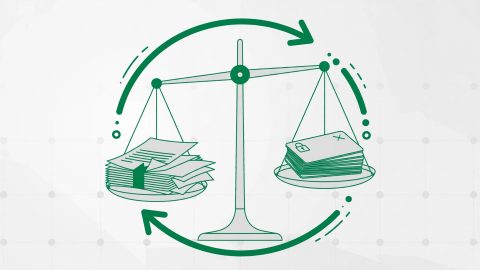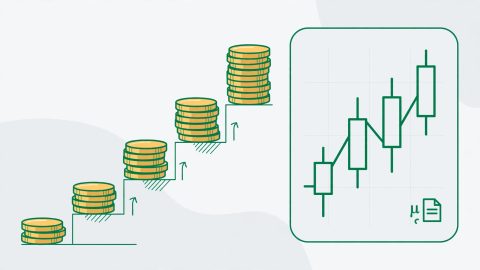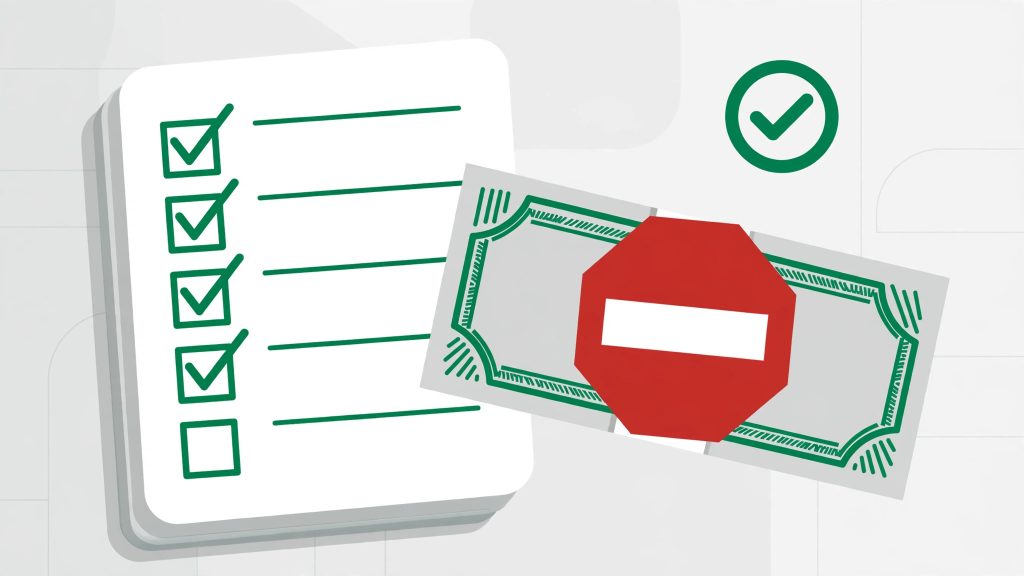
Your payout was denied because something in your trading violated the firm’s rules — most commonly a breached consistency rule, a drawdown violation, or trading during a restricted window. Payout denials are almost always rule problems, not the firm stealing your money.
1. You Broke the Consistency Rule
This is the #1 payout killer, and it catches more traders than everything else on this list combined.
A consistency rule says no single day can make up more than a certain percentage of your total profit — commonly 30–40%, depending on the firm. So if you made $3,000 total and $1,500 of it came from one monster day, that’s 50% from a single day. Violation.
Here’s the trap: you can pass the evaluation and still get your first payout denied. You trade clean for three weeks, then one huge NQ day puts you over the threshold. The dashboard lets you keep trading — nobody warns you — then you request your first payout and get a denial that says “consistency violation.”
The fix is simple: know your firm’s consistency percentage before you start, and track it yourself. When one day’s profit nears the limit, trade smaller or stop for the day. The rule exists to catch gamblers — but it will happily catch a good trader with one hot day too.
2. You Breached the Drawdown and Didn’t Realize It
Drawdown breaches are the second-most-common reason, and they usually involve a rule the trader half-understood.
The classic version: trailing drawdown. Your floor follows your balance upward intraday, so you can be up on the day and still breach. I’ve seen traders request payouts genuinely believing they traded clean — then find out an afternoon pullback after a big morning winner crossed the trailing line.
The other version: daily loss limit. You blow past the per-day loss cap on a bad day, keep trading, even finish the month green — but the breach already happened. Payout denied.
Before you request a payout, open your dashboard and check your risk-rule history for the entire cycle, not just the day. If there’s a breach anywhere in there, that’s your answer. For a full breakdown of how the two drawdown types work, read my explainer on trailing drawdown vs end-of-day drawdown.
3. You Traded During Restricted News
Most prop firms restrict trading around major economic releases — NFP, CPI, FOMC. The restriction window varies: some firms block the 2–3 minutes around the release, others block the full 30 minutes before and after, and a few block the entire release day for certain account types.
The killer detail: the restriction often applies to open positions, not just new entries. Having a trade open through the release counts the same as opening one. Traders get caught holding a swing trade they opened the night before, the release hits, and the trade they forgot about invalidates their payout.
Know your firm’s exact restricted events and windows. I keep them on a sticky note: NFP (first Friday, 8:30 AM ET), CPI (8:30 AM ET), FOMC (2:00 PM ET). Flatten everything 5 minutes before the window opens — a good trade on a news day isn’t worth a denied payout.
4. You Used a Prohibited Strategy or Tool
Firms publish prohibited-strategy lists that almost nobody reads. The big ones:
- Hedging across accounts. Going long on one eval and short on another to game the system. Firms share data with each other — getting caught means banned from multiple firms, not just one denial.
- Copy trading / group signals. Mirroring someone else’s trades, especially through a trade copier service, is banned at most firms.
- High-frequency EAs and latency arbitrage. Any automated strategy exploiting price-feed delays or running hundreds of trades per day.
- Martingale / grid averaging. Some firms explicitly ban it; others will flag the account under “prohibited trading behavior.”
The honest trader’s version of this problem: you followed a Discord signal service or let a “prop firm passing service” trade your account. When the firm detects it, you lose the account, the eval fee, and the payout. Never let anyone else touch your account.
5. Your Account or KYC Didn’t Match Up
The unglamorous administrative reasons:
- Name mismatch. The name on your trading account doesn’t match the name on your ID or your payout wallet. This happens more than you’d think — middle names, nicknames, a spouse’s PayPal.
- Unverified identity. You never completed KYC, or the documents expired.
- Wrong payout method. Requesting a crypto payout to an exchange wallet that doesn’t accept it, or a bank transfer with wrong details.
- Duplicate accounts. Two accounts under slightly different names, or an account opened while an old one was still under review.
None of these are trading problems, which is why they’re maddening — a $5,000 payout held up because the account says “Mike” and the ID says “Michael.” When you open an evaluation, use your exact legal name and verify identity immediately. Don’t leave paperwork between you and your money.
6. You Didn’t Meet the Minimum Requirements
Some firms require minimum trading days before a payout — commonly 5–10 active trading days in the cycle. A “trading day” usually means a day where you actually placed trades; logging in doesn’t count.
Other requirements that trip people up:
- Minimum profit buffer. Some firms require you to stay above the starting balance by a minimum amount after the payout — request too much and it’s denied.
- Payout schedule. Most firms pay on a fixed schedule (biweekly, monthly, or specific days). Requesting outside the window isn’t technically a denial — but it reads like one, and impatient traders panic.
Read the payout terms for your specific account before you request. Every firm is different, and the rules for a 50K account aren’t the rules for a 150K account at the same firm.
7. The Firm Itself Is Failing
This is the one nobody wants to talk about, but 2026 made it impossible to ignore. Sometimes your payout is denied because the firm can’t pay — cash-flow problems, a payout backlog they won’t admit to, or a shutdown in progress.
The warning signs: payout timelines quietly stretching from days to weeks, support going silent on payout tickets, Trustpilot filling up with payout complaints, and the firm’s social media going quiet. If you see all four at once, stop buying new evaluations there immediately.
I wrote about exactly this when FundedSeat shut down — what happens to traders’ money when a firm closes and how to spot the warning signs early: FundedSeat Closes: What Happens to Your Money When a Prop Firm Shuts Down.
This is also why I tell traders to spread accounts across firms rather than going all-in on one. Before you buy any evaluation, run the numbers through my free prop firm calculator so you know exactly what your eval spend, expected payouts, and risk per trade look like — for your numbers.
What to Do After a Denial
If it already happened, here’s the playbook:
- Read the denial email twice. Firms usually state the specific rule. “Consistency violation” and “risk breach” mean different things and have different fixes.
- Pull your dashboard history for the full cycle. Find the exact trade or day. Match it to the rule cited. Most denials become obvious the moment you look at the data instead of the feeling.
- Appeal once, calmly, with specifics. If you genuinely believe the denial is wrong, open one support ticket: state the rule cited, show your data, ask for clarification. Don’t threaten, don’t spam five tickets, don’t go to Trustpilot first. One calm, specific appeal.
- Decide whether the firm is still worth your money. A firm that denies your payout over a rule you provably didn’t break — and won’t explain it — has told you everything about how your next payout will go.
How to Never Get Denied
The prevention checklist, before every payout request:
- Consistency percentage checked for the full cycle (no single day over the limit)
- No drawdown or daily-loss breach anywhere in the cycle
- No trades held through restricted news windows
- No prohibited strategies, copiers, or anyone else trading the account
- Legal name matches ID; KYC complete; payout details correct
- Minimum trading days met; payout schedule understood; minimum buffer respected
- Firm’s payout reputation checked (recent reviews, payout timelines normal)
Most traders treat payout day as a formality. Treat it like an audit — five minutes on this checklist is the cheapest insurance in prop trading.
The Bottom Line
Payout denials come from rules — consistency, drawdown, news restrictions, prohibited strategies, paperwork, minimums, or a firm that’s failing. Almost every one is avoidable if you know the rules before you trade and check yourself before you request.
Starting your prop firm journey? My free 24-day email course teaches you futures from zero — including how prop firm evaluations actually work — one short email a day.
Frequently Asked Questions
Why do prop firms deny payouts?
The most common reasons are consistency-rule violations, drawdown or daily-loss breaches, trading during restricted news windows, prohibited strategies (hedging, copy trading, HFT), incomplete KYC or mismatched account details, and unmet minimum trading-day requirements. In rare cases, the firm itself is failing and can’t pay.
Can you appeal a denied prop firm payout?
Yes. Read the denial email to find the specific rule cited, pull your dashboard history for the full cycle to check it, then open one calm, specific support ticket with your data. Most denials are correct and traceable to a specific trade or day — but if the firm won’t explain a denial you can disprove, take your business elsewhere.
Does one bad day void your whole payout cycle?
It can. A single day’s profit over the consistency limit, one drawdown breach, or one trade held through restricted news can invalidate the entire cycle’s payout. That’s why tracking your compliance during the cycle — not just at payout time — matters so much.
How do I avoid payout problems with prop firms?
Know the rules before you start (consistency %, drawdown type, news windows, minimum trading days), use your exact legal name and complete KYC immediately, never let anyone else trade your account, check your dashboard for breaches before requesting, and spread accounts across multiple firms instead of going all-in on one.